Tipton County is getting its first dedicated look underground at the water that fills local taps.
The University of Memphis Center for Applied Earth Science and Engineering Research (CAESER) is partnering with Tipton County to build the county’s first groundwater monitoring network, the university announced on Nov. 2. The work centers on the Memphis aquifer, the main drinking-water source for Tipton County, Shelby County and much of West Tennessee.
What they’re building
Researchers plan to install six new groundwater monitoring wells and assess existing public-supply wells so they can expand what is known about groundwater conditions beneath the county.
Monitoring wells are not the same as the production wells that send water to homes and businesses. They are built for observation. According to CAESER, the new network is meant to:
- Continuously measure groundwater levels and temperature
- Collect water-quality samples
- Determine water age
- Better map the county’s subsurface geology, including possible breaches in the protective clay layer above the aquifer
Those baseline readings should help scientists spot trends over time and see how the groundwater system responds to natural changes and human activity, the center said.
Why it matters here
West Tennessee’s population and water demand are growing, and new industrial and economic projects add pressure on long-term water planning, CAESER said. The center framed the network as a way for Tipton County to gather scientific data now so leaders can make better decisions about protecting groundwater later.
“This project represents a major step toward better understanding and protecting the Memphis aquifer,” said CAESER research professor and project principal investigator Rodrigo Villalpando-Vizcaino. “By establishing a network specifically designed for long-term monitoring, this represents a proactive effort by Tipton County to better understand its groundwater resources and provide reliable scientific information and data for future water-resource planning and protection.”
Investigator Paulina Reyes-Garcia said the Memphis aquifer system is among the country’s most productive groundwater sources, and that data from the network could show regional trends and support future research across West Tennessee.
As wells go in and data collection starts, CAESER researchers plan to work with county officials to study the results and share findings. The university release did not list well locations, a construction timeline or a project cost.
Source: University of Memphis Herff College / CAESER announcement, Nov. 2, 2026.
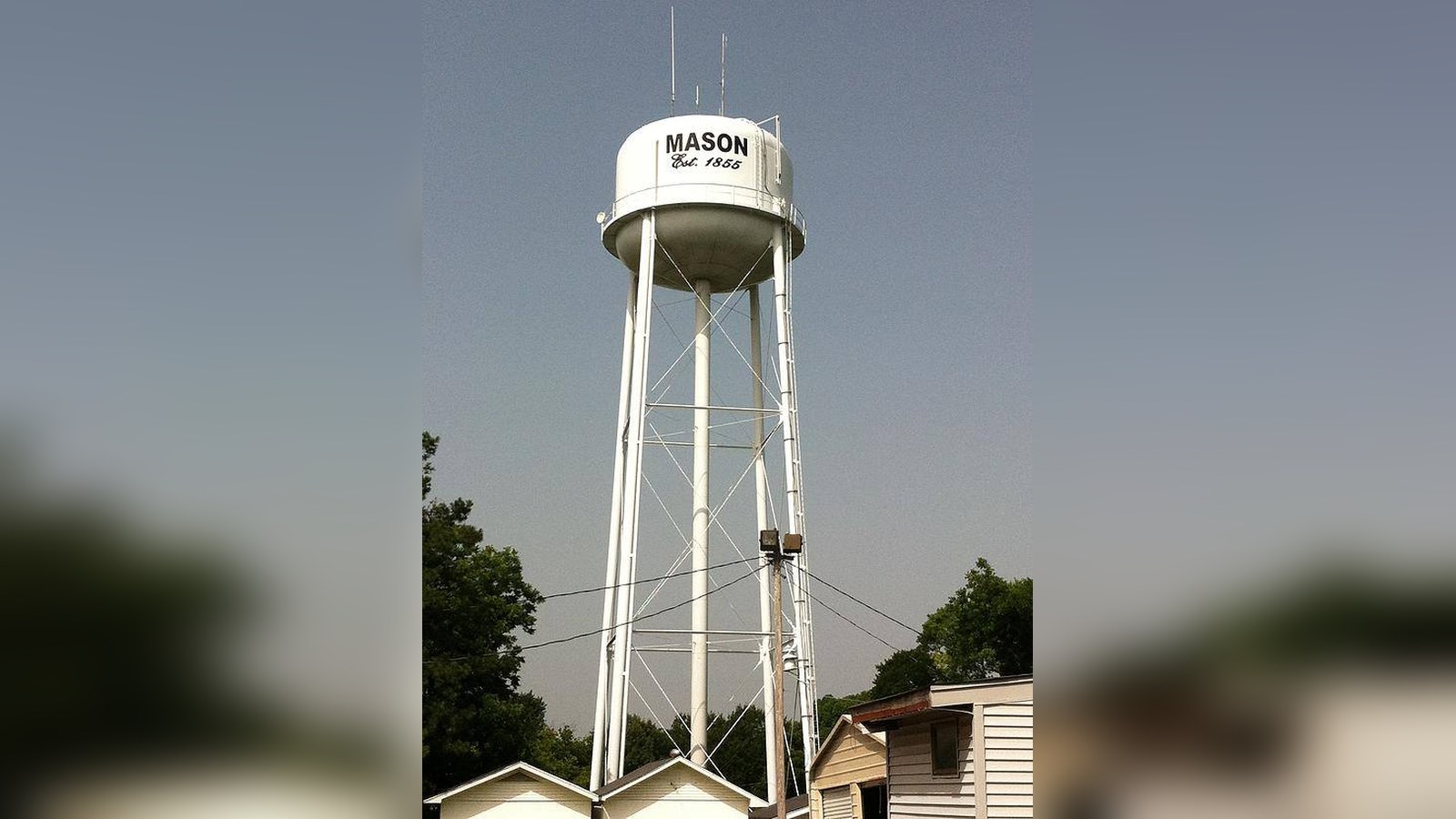
Photo: Town of Mason water tower (file photo). Masonpd / Wikimedia Commons (CC BY-SA 4.0)